
I make systems and formats that change how people work and make things.

For ten years I've built systems that put people in motion: machines, services, workshops, instructions.
Each one is an experiment in the same problem: What makes a person do the thing they didn't know they wanted to do.
The answer keeps getting smaller and smaller.
The first apparatus

ARS-1 became my first experiment in exploring the question of meaning-making through personalisation.
I built a contraption that would create a personalised concoction through scent tests, or so called "aguas de tiempo" (traditional Mexican herbal remedies) using tinctures made from flowers, roots and seeds.
Unfinished: it established the pattern I'd repeat for a decade: build a structure, put people inside it, watch what they do.


Where the mechanisms came from

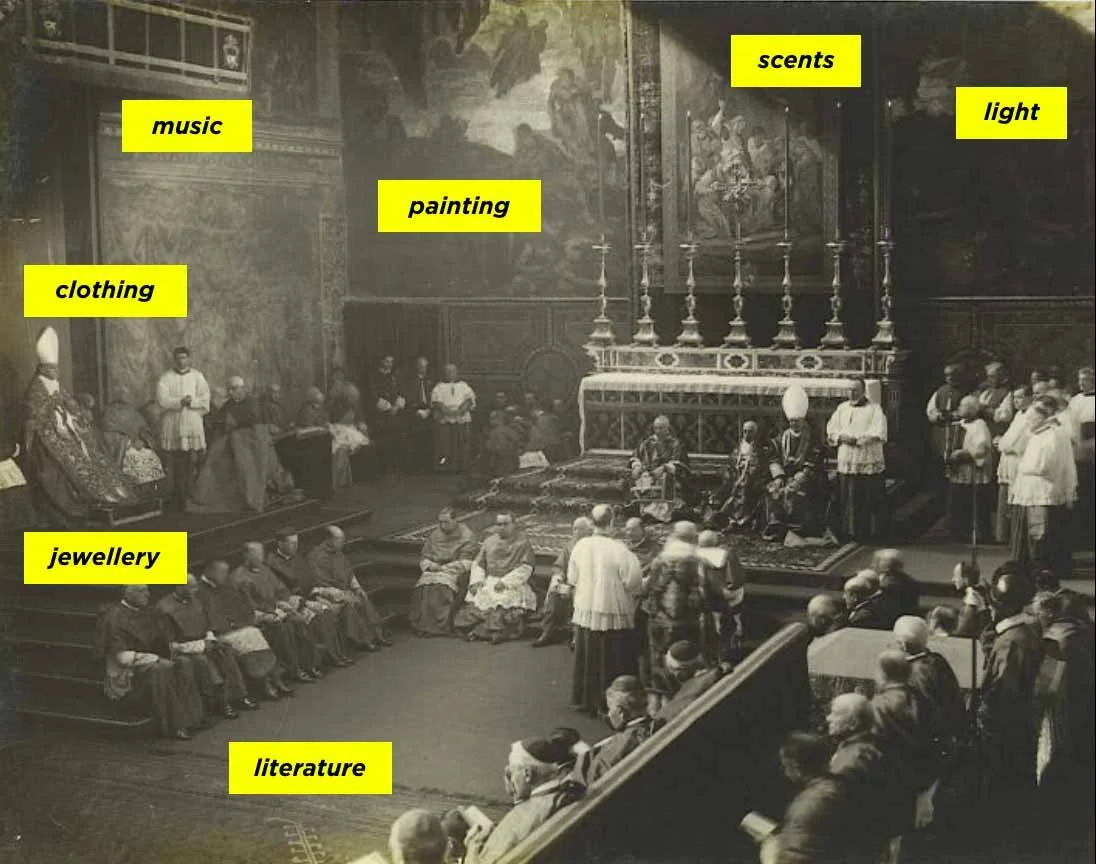
My MA dissertation explored how to extract meaning-making mechanisms from religious practices and apply them to design.
The core insight: religions have spent thousands of years perfecting ways to help people connect with purpose, people and to make sense of life transitions. How might we identify these mechanisms and use them as part of the design process.
The research gave me a framework for thinking about meaning as something that can be intentionally designed rather than just hoped for.


From abstract mechanisms to machine

I built a physical machine to create personalised meaningful objects. Users would interact with various stimuli, and the machine, powered by artificial intelligence, would combine elements based on their preferences to create a custom "amulet."
The technical execution was ambitious and clunky. The real finding was structural: meaning can't be manufactured. It emerges from process and relationship: which means the design object isn't the machine, it's the sequence of actions people are invited into.


From machine to service

Mood Lab was an experiment in creating a business around personalised wellbeing experiences. I designed 30-45 minute sessions that would adapt to users' personalities and emotional needs, sequencing short activities that focused on either enjoyment (hedonia) or significance (eudaemonia)
Through extensive prototyping and user-testing I developed the complete service framework alongside technical specifications for a real-time adaptive intervention.


From service to format
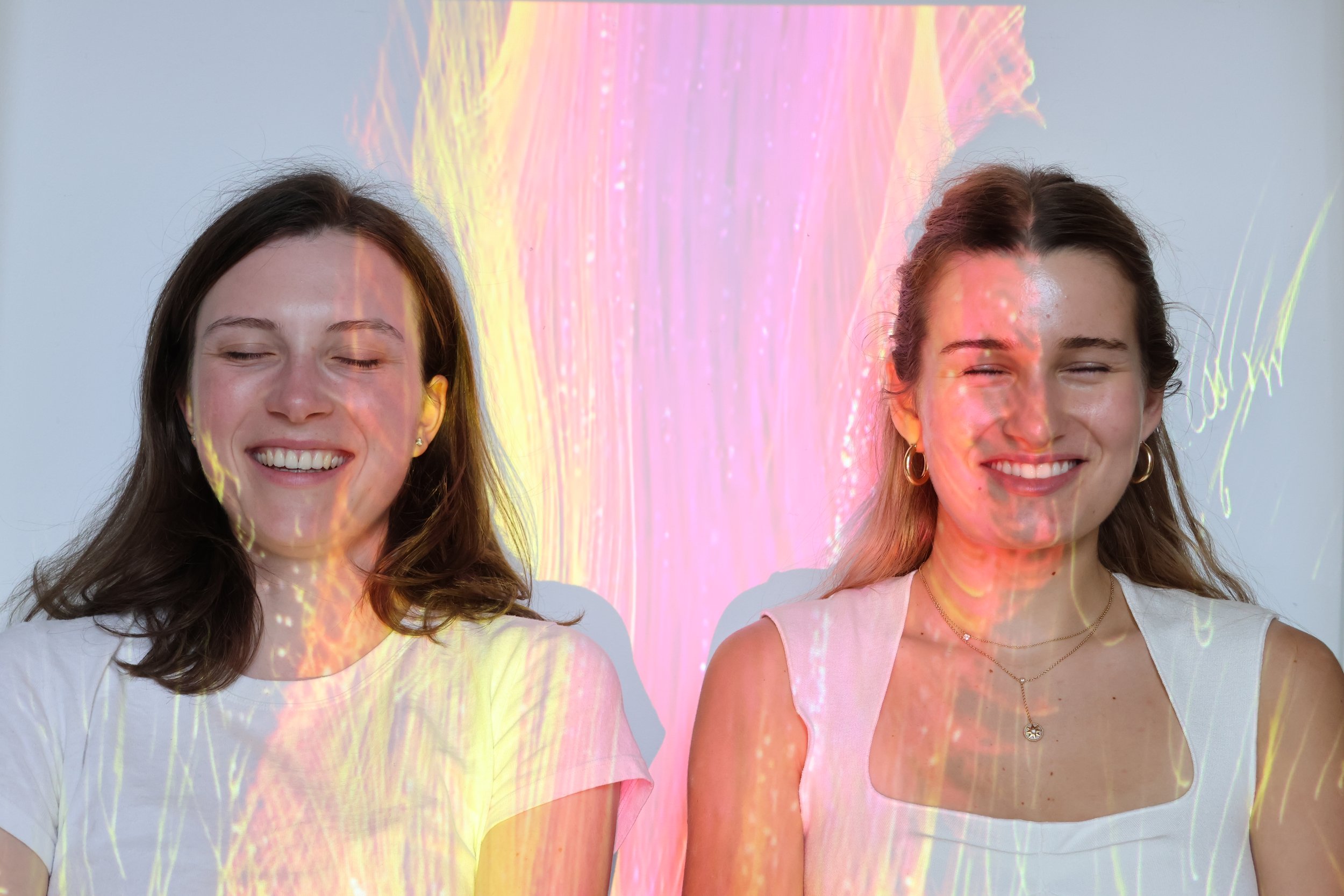
Group experiences around meaning-making. The format invited participants to channel frustration and anxiety into creating meaningful moments of beauty and connection for future participants of the workshop to find.
Which changes what you build. Not a system that produces meaning, but a format that produces action: something people can do, repeat, and pass on.


The permission engine
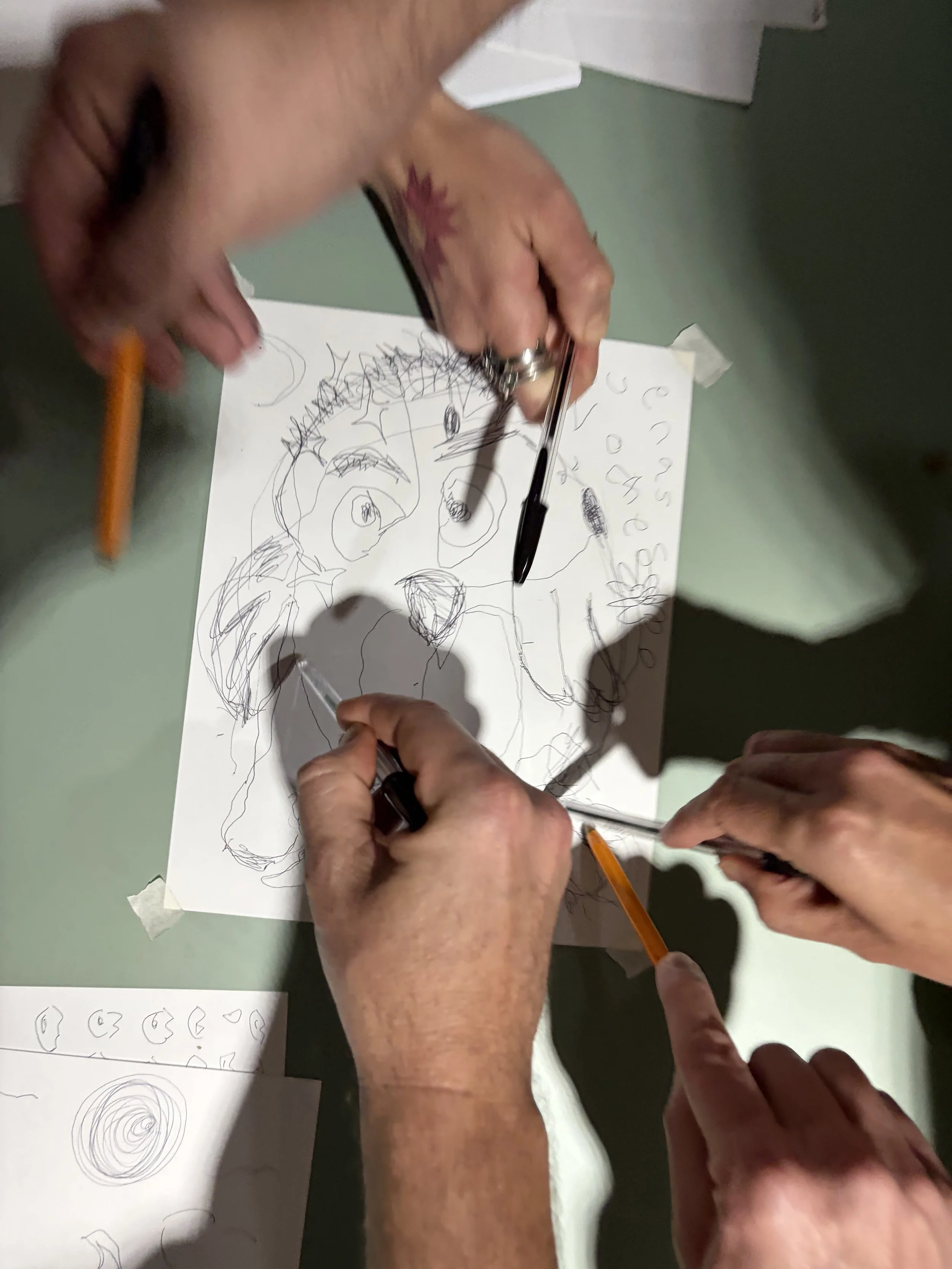
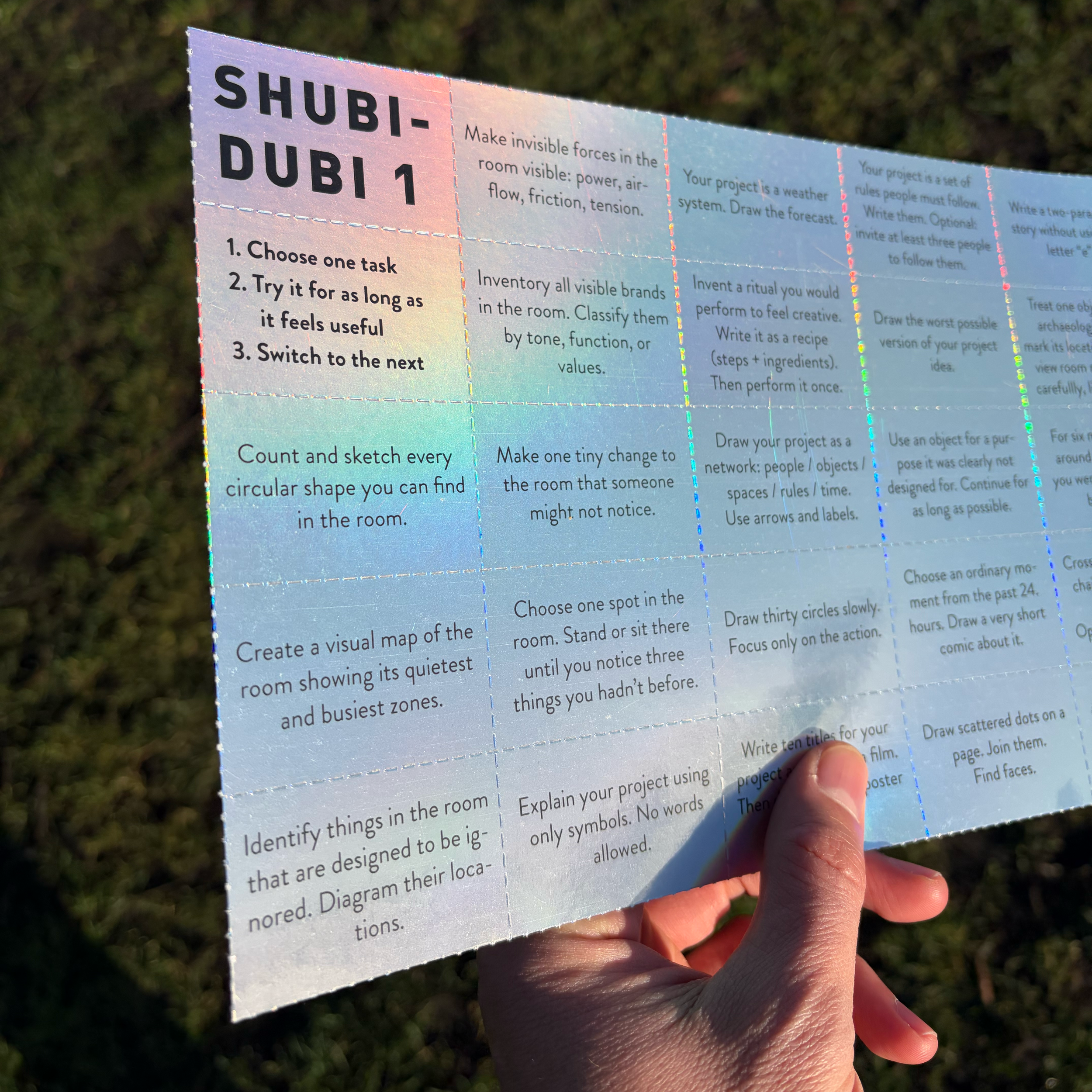
Shubidubi is the format with the machine, the session and the outcome taken out. A set of instructions: small, big, odd, easy to do, hard, that circulate on paper, in rooms, between people.
No goals, no performance, nothing to complete correctly. Just: someone picks up a task, does it, picks up another, continues. That's the whole system.
Nothing might happen. Something might shift.
In institutional or organisational settings, the format is reworked through commissioned collaborations.
Actionary is the engine underneath Shubidubi: 144 moves for changing how you're working when you're stuck, repeating yourself, or too certain what comes next. This tool shows what I do: not the work itself, but the structure that produces it.